
Before and After Buying an Apartment Abroad: What Real Estate Agents Usually Do Not Explain
Buying property abroad is not only about choosing the right apartment, checking the view, negotiating the price and signing papers at the land office. It is also part of a wider long-term stay abroad plan. There is another, quieter part of the process: documents. And this part can become uncomfortable exactly when you are already tired, already committed, and already inside the system.
If you are buying real estate abroad, think in advance about which documents you may need before and after the purchase. Prepare them before the deal, not after it.
This advice is especially important in countries where the local alphabet is different from Latin. Thailand is exactly such a country.
The main problem is simple: your name must appear in local documents in one stable, correct version. If different offices transliterate it differently, you may later have different versions of yourself on different documents.
Passport Translation
In Thailand, for example, it may not be enough just to translate your passport. In many situations the translation needs to be legalized by the Department of Consular Affairs, Ministry of Foreign Affairs.
There is one important detail: translate only what is written in the passport in English.
The most important part is the translation of your first name and surname into Thai. This is not a cosmetic detail. This is the base for everything that may follow: municipal documents, property-related documents, visa paperwork, a will, and sometimes ordinary administrative requests where nobody wants to think too much and everyone wants the spelling to match.
Practical advice: make two legalized translations at once. Sometimes offices take the original legalized translation and keep it in the file. For example, this may happen at a city hall or municipal office.
As a result, you should always have your own basic document with the correct Thai spelling of your name and surname. Then all local documents can be prepared in one version, not in several accidental versions.
Important Documents Beyond the Passport
A passport is not the only document that may matter before and after buying property abroad. Several personal documents can become important for property, visas and long-term stay, healthcare abroad, municipal registration, inheritance planning and family questions.
| Document | Why it may matter |
|---|---|
| Marriage certificate | Often needed more than once: for visas, municipal procedures, inheritance planning and wills. |
| Your birth certificate | May be useful for identity, family status and administrative procedures. |
| Children’s birth certificates | Important if children may be heirs or involved in future legal steps. |
| Children’s passports | Useful when children are connected to property, inheritance or family documents. |
A marriage certificate may be requested repeatedly: when applying for or extending visas, when dealing with municipal registration, when preparing a will, or when proving family status in a local office.
Birth certificates may also become relevant. They may be requested at a city hall, and they can also be useful when property ownership and family connections have to be documented clearly.
In Thailand, documents often need to be translated into Thai and legalized through the Department of Consular Affairs. With legalized documents, there are usually fewer questions. This is the main point of the legalization: not beauty, not formality, but fewer disputes at the next counter.
Property Purchase Is Not the End of the Paperwork
Many buyers think that the main finish line is the transfer of ownership. In Thailand, the property transfer itself is handled through the Land Department system. For foreign buyers, condominium ownership has its own rules, including the foreign ownership quota in a condominium building.
This is why documents should be prepared before the transaction, not when someone suddenly asks for them. When the buyer is already in the process, every missing document becomes more expensive emotionally. Sometimes financially too.
Do not build the whole purchase only around the real estate agent’s checklist. A real estate agent may help with the sale. But your long-term documents, your family status, your inheritance plan and the correct spelling of your name are your responsibility.
Wills
A will is one of the most important documents to prepare after buying property abroad. It is better to do it soon after the transaction, when you already have the final property documents.
And it is better not to write the will only in the simplest version: “everything goes to one person.” Life is not always so polite.
A proper will should consider different scenarios. What happens if the main heir is no longer alive at the moment of your death? What happens if the heir dies after you, but before completing the inheritance procedure within the legal time limit? What happens if documents have to be handled from another country? What happens if several heirs do not agree with each other?
A will is not about pessimism. It is about removing chaos from the shoulders of people who will already be in a difficult moment.
Every country has its own inheritance rules. In Thailand, in Turkey, in Europe, in the Gulf, in Latin America — the logic can be different. Marriage, children, property acquired during marriage, forced heirs, court procedure, language of documents, registration rules: all of this may matter.
This is why a will should be prepared locally, with a lawyer who understands local inheritance practice and foreign owners. A cheap template may look comforting, but inheritance is exactly the area where “almost correct” can become a very expensive problem.
What to Prepare Before the Deal
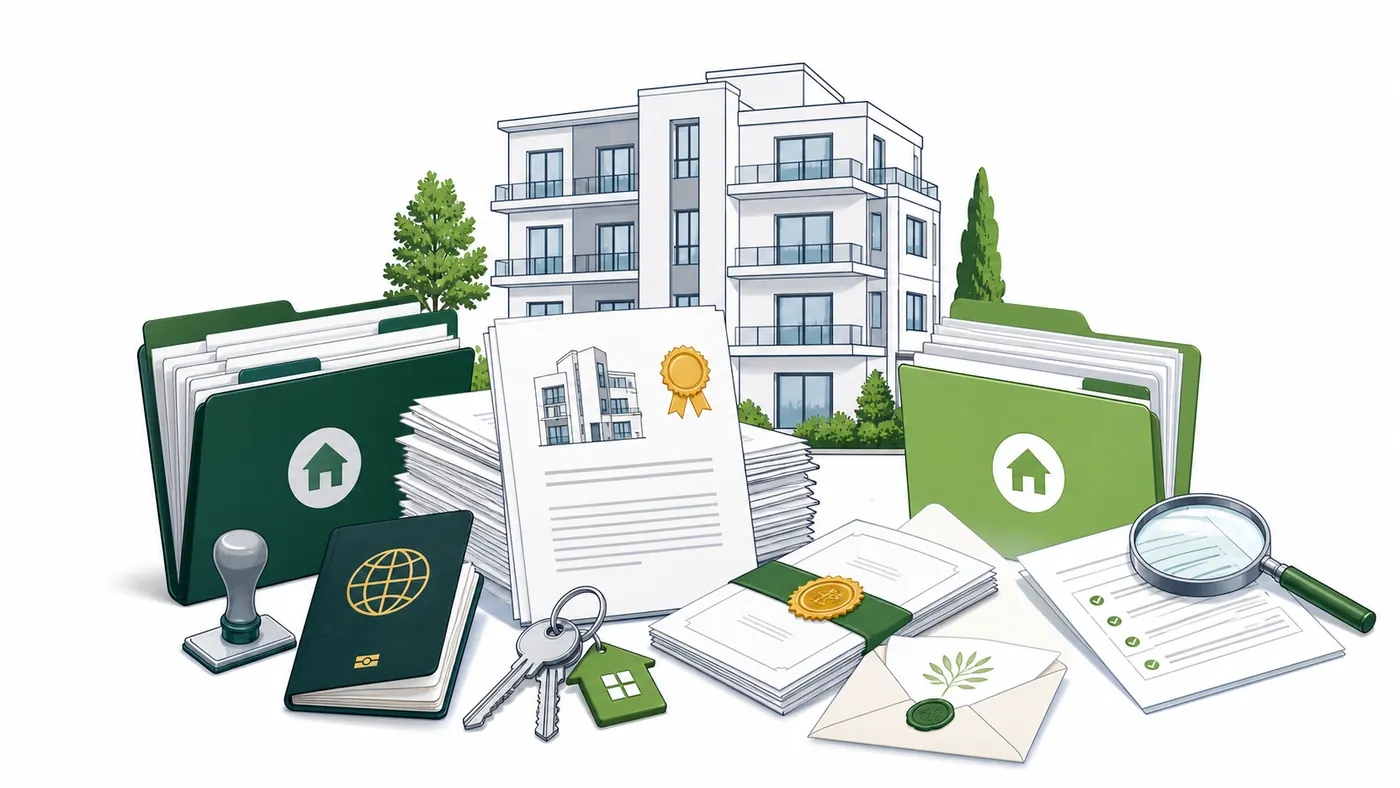
Before buying an apartment abroad, prepare a small document folder. It does not have to be dramatic. It has to be boring, complete and usable.
- Passport translation with correct local spelling of your name.
- Legalized passport translation, if required locally.
- Marriage certificate translated and legalized, if applicable.
- Birth certificates translated and legalized, if they may be needed.
- Children’s documents, if children may be connected to inheritance or family procedures.
- Copies of all legalized documents.
- Digital scans stored safely.
- A written list of the exact spelling of your name in the local language.
What to Do After the Purchase
After the property is registered, do not simply put the documents in a folder and forget about them. This is the moment to complete the second layer of protection.
- Check that your name is spelled consistently in all property documents.
- Keep copies of the title or ownership documents.
- Prepare or update your will.
- Check whether your spouse or heirs need translated documents.
- Keep the contact details of the lawyer, juristic office, building management and relevant local office.
- Make sure your family knows where the documents are.
Do the documents early. Correct documents are boring only until the day when they save you from a problem.
The Real Lesson
Real estate agents talk about location, price, sea view, rental yield, furniture packages and transfer dates. They may be helpful. They may be professional. But they are not the people who will live inside your paperwork for the next ten or twenty years.
Before and after buying property abroad, documents are not a secondary detail. They are part of the purchase itself. This is also a question of legal and safety risks abroad, because weak paperwork can become a serious problem when you are older and less mobile.
Do everything correctly from the beginning. Translate what needs to be translated. Legalize what needs to be legalized. Keep one stable spelling of your name. Prepare family documents. Make a will.
Because abroad, the most expensive document is often the one you did not prepare in time.