
Yellow Tabien Baan in Thailand: Full Guide for Foreign Condo Owners
The Yellow Tabien Baan is one of those Thai documents that many foreign property buyers do not think about when they are buying a condominium. At the moment of purchase, the focus is usually on the apartment, the building, the view, the price, the transfer date, and the Land Office. But after the purchase, especially for long-term living in Thailand, the yellow house book can become unexpectedly important.
The Yellow Tabien Baan became especially relevant for foreign condominium owners after land and building tax rules started to matter in practice. Together with it, a foreigner may also receive another useful document: the pink Thai ID card for foreigners.
This article explains what the Yellow Tabien Baan is, why it may be useful, who can usually apply for it, what documents may be needed, why the Thai spelling of your name matters, how mistakes in the chanote can create problems, and how the process may look at city hall.
Important: requirements may differ from one municipality to another. This guide describes the practical logic of the process for foreign condominium owners in Thailand. The final decision is always made by the local registration office, district office, municipality, or city hall where the application is submitted.
What the Yellow Tabien Baan Is
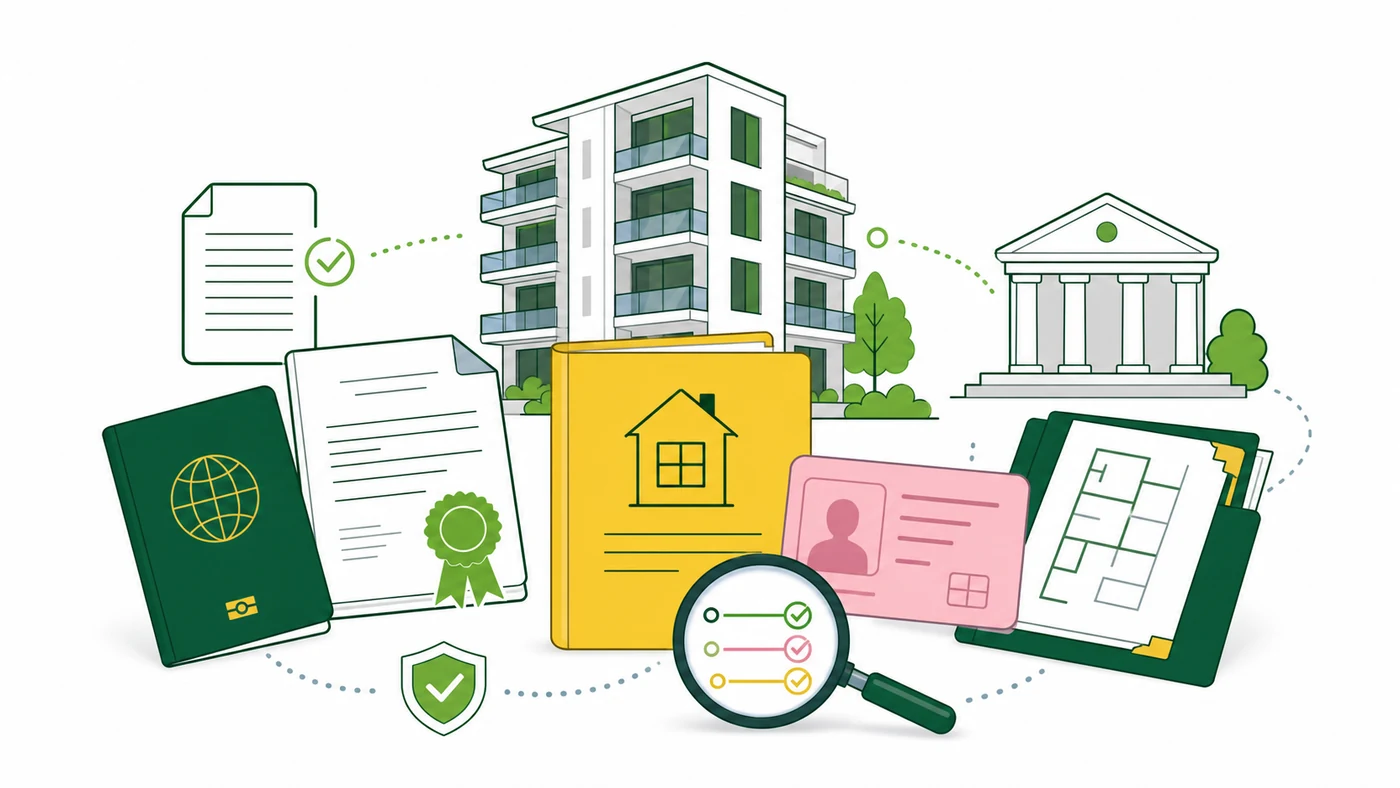
Tabien Baan is the Thai house registration book. Thai citizens are usually registered in a blue house book. Foreigners may be registered in a yellow house book, commonly called Yellow Tabien Baan.
For a foreigner, the yellow house book does not mean Thai citizenship. It does not give permanent residence. It does not replace a visa. It does not replace a passport. It does not prove ownership by itself. It is an address registration document showing that a foreigner is registered at a specific address in Thailand.
For someone who owns a condominium and plans to live in Thailand long term, this document can still be useful. Thai administrative systems often rely on address registration, written Thai names, local records, and documents that can be checked by another office later.
| Document | What it is | What it is not |
|---|---|---|
| Yellow Tabien Baan | A house registration book for a foreigner at a Thai address. | It is not a visa, not citizenship, and not permanent residence. |
| Pink ID card | A Thai ID card for foreigners, usually issued after house registration. | It is not a passport and does not replace immigration documents. |
| Chanote | The title deed or condominium ownership document. | It does not automatically register the foreign owner in a house book. |
Why Foreign Condo Owners May Need These Documents
The Yellow Tabien Baan and pink ID card are not mandatory for every foreigner. Many people live in Thailand without them. But for a foreign condominium owner who plans to stay long term, they can make everyday administrative life easier.
The usefulness is not always one big official advantage. It is often a collection of small practical advantages that appear again and again.
1. Land and building tax
The yellow house book became important for many condominium owners because of land and building tax rules. Thailand’s official government portal explains land and building tax rules for foreigners who own condominium units.
If a property is treated as a residential property used by the owner and the owner’s name appears in house registration, tax treatment may be different from property that is not registered this way.
2. Less need to carry the passport everywhere
In Thailand, a passport is often requested in ordinary situations: hospitals, hotels, domestic flights, offices, and sometimes other local services. With a pink ID card, a foreigner may be able to use the card in many domestic situations instead of carrying the passport everywhere.
This does not mean the passport becomes unnecessary. It means daily life can become less uncomfortable.
3. Possible local pricing
In some cases, the pink ID card may help when visiting national parks or using certain government services. Sometimes foreigners with a local ID card may pay less than tourists. Sometimes they may not. It depends on the place, the staff, and the current rules.
It should be treated as a possible benefit, not as a guaranteed right.
4. Banking and local paperwork
Foreigners often report that local documents can help with Thai banks and other administrative procedures. It does not mean every bank will accept every document in the same way, but having a Thai address record and ID card can make conversations easier.
The simplest reason is this: while it is possible to prepare useful local documents, it is often better to prepare them. Rules can change, opportunities can disappear, and documents already issued may later become useful.
Who This Process Usually Applies To
This guide is mainly relevant for foreign condominium owners in Thailand. The most straightforward situation is a condominium owned in foreign freehold quota.
The logic may not apply in the same way to Thai quota structures, houses, land, leases, company ownership, or other arrangements. The local office may treat these cases differently.
Typical starting point
- A condominium unit in foreign freehold quota.
- A foreign owner with long-term stay status in Thailand.
- Property documents from the Land Office.
- A need to register the foreigner at the condominium address.
- Correct Thai spelling of the foreigner’s full name.
A Yellow Tabien Baan is usually issued for one address. If a person owns several condominium units, local practice may allow the yellow book for one unit, while other units may only have their blue house books connected to the property record.
Main Requirements Before Applying
The exact list should always be checked with the local city hall or district office. But several requirements appear repeatedly in practice.
| Requirement | Why it matters |
|---|---|
| Long-term stay in Thailand | Applicants on a tourist visa or short entry stamp are usually not the intended applicants for this document. |
| Enough visa validity left | If only a short time remains before visa expiry, the office may refuse to process the application. |
| Correct documents | The Thai spelling of the name should match across passport translation, chanote, and other documents. |
| Thai witnesses | Two Thai witnesses may be required, and they should bring ID cards and their own blue Tabien Baan. |
Timing is important: applying right after receiving or extending a long-term visa is usually better than waiting until only two or three months are left. If the remaining visa period is too short, the office may simply refuse.
The Biggest Problem: Wrong Thai Name in the Chanote
One of the most common and most unpleasant problems is a wrong Thai spelling of the foreign owner’s name in the chanote or Land Office documents.
This often happens because the name is transliterated casually during the property purchase. A real estate agent may complete the sale, but the agent may not carefully control the Thai spelling of the buyer’s name. Later the owner discovers that the name in the chanote does not match the legalized passport translation or other documents.
This is not a small cosmetic issue. If your name appears differently in different Thai documents, offices may treat the paperwork as inconsistent.
Why this should be fixed before buying
The correct approach is to prepare the passport translation before the property transfer and use one stable Thai spelling everywhere from the beginning. This is exactly why document preparation before and after buying property abroad matters.
Two Ways to Deal with a Wrong Name
If the chanote already contains the wrong Thai spelling, there are usually two practical solutions.
| Option | What happens | Result |
|---|---|---|
| Correct the chanote | The owner prepares correct documents and asks the Land Office to correct the name. | The paperwork becomes cleaner and more logical for the future. |
| Copy the wrong spelling | The incorrect spelling from the chanote is copied into later translations or documents. | The mistake follows the owner into future paperwork. |
The better solution is usually to correct the chanote. Copying a mistake may seem easier in the moment, but it creates a weak foundation for all later documents.
How to Correct the Name in the Chanote
The process should be confirmed with the relevant Land Office, but in practice it usually follows this logic.
- Prepare a Thai translation of the foreign passport with the correct spelling of the name.
- Legalize the translation through the Department of Consular Affairs, Ministry of Foreign Affairs.
- Prepare a supporting certificate or letter confirming that the person written incorrectly in the chanote is the same person as the passport holder.
- Bring the passport, chanote, legalized passport translation, and supporting certificate to the Land Office.
- Ask the Land Office to correct the owner’s name in the chanote or property record.
The chanote should be brought when preparing the supporting certificate. The incorrect Thai spelling must be copied exactly, because the document must show which record is being corrected.
At the Land Office, the applicant explains that the name in the chanote must be corrected. The office checks the documents, prepares the correction, collects the official fee, and issues the updated document or certified correction. In many cases the correction itself may not take long, but waiting time depends on the office and the number of people.
Documents for the Yellow Tabien Baan
The document folder should be prepared carefully. It is better to prepare more than to arrive at city hall and discover that one translated or legalized document is missing.
Translated and legalized documents
- Passport translation into Thai.
- Marriage certificate, if spouse is involved.
- Birth certificates, if required by the local office.
- Other family documents if they are connected to the application.
For a passport, the key issue is the translation of the English passport data into Thai. For marriage certificates and birth certificates, the path may depend on the original language and legalization requirements.
If the document was issued in a non-English language, it may need to be translated first into English and then into Thai, depending on what the Thai legalization office accepts. This should be checked before ordering translations.
Practical advice: it is often better to translate and legalize all important family documents together: passport, marriage certificate, birth certificates, and children’s documents if relevant. Later, these documents may be needed for visas, inheritance, city hall, banks, or other procedures.
Residence Certificate from Immigration
A Residence Certificate is usually obtained from Immigration. For this process, the purpose should be written clearly, for example for city hall, house registration, or Tabien Baan.
The certificate is usually valid for a limited time, so it should not be prepared too early. It is better to collect the main document package first and request the Residence Certificate when the application is almost ready.
Documents often requested for a Residence Certificate
- Passport original and copies.
- Passport photo page copy.
- Visa page copy.
- Entry stamp or immigration record copy.
- Address registration or local notification documents, if required.
- Condominium documents such as chanote and blue book.
- Marriage certificate translation, if one spouse owns the property and both spouses need certificates.
- Photos.
- Application form.
Property Documents
The property file usually includes the chanote, the blue house book for the unit, and the Land Office document connected with the purchase or ownership registration. These documents prove the connection between the applicant and the address.
Thailand’s official government portal gives information about documents required for foreign property ownership registration and condominium ownership by foreigners.
Thai Witnesses
Two Thai witnesses may be required. They should bring not only Thai ID cards, but also their own blue Tabien Baan. Without these documents, the office may not accept them as witnesses.
It can be practical to ask condominium juristic office managers or building management staff, especially if they speak English and know the property. They may also help communicate with city hall officers and speed up the process.
During the application, officers may ask questions. The questions can be different for each person. They may ask when the applicant first came to Thailand, how many times the applicant visited Thailand before, when the condominium was bought, why it was bought, who lives there, and other practical questions.
Witnesses may need to come twice. This should be discussed in advance. It is not always a one-visit favor.
At City Hall: How the Process Usually Looks
When all documents are collected, the applicant goes to city hall or the local registration office together with the Thai witnesses.
The officers check the documents, fill out forms, ask questions, and may request signatures. The process may take time because the office needs to connect several things: identity, visa status, property address, witnesses, translations, and local registration rules.
After the first visit, the file may be processed for one or two weeks, sometimes longer. The office may contact the condominium office or applicant when the documents are ready for the next step.
At the second visit, witnesses may need to come again. Additional signatures may be required. Sometimes the applicant may be asked to sign forms that are completed by the office. This can feel uncomfortable, but in local administrative practice it may happen.
After final processing, the Yellow Tabien Baan can be collected. The blue book and other original property documents should also be returned if they were kept for checking.
| Visit | What usually happens |
|---|---|
| First visit | Submission of documents, witnesses present, questions, forms, initial processing. |
| Second visit | Additional signatures, witness confirmation, final review of the file. |
| Final collection | The Yellow Tabien Baan is collected, and the pink ID card may be issued or requested separately. |
How Long It Can Take
If translations, legalization, Residence Certificate, witnesses, and property documents are already prepared, the city hall stage may take several weeks. With preparation included, the whole process can easily take around one month.
If the name in the chanote must be corrected first, the timeline becomes longer. If documents need translation and legalization from zero, the process also becomes longer.
Realistic timeline
- Translation and legalization: depends on document volume and appointment availability.
- Residence Certificate: often quick, but should be timed correctly.
- Chanote correction: depends on Land Office workload and document readiness.
- City hall processing: often one to several weeks.
- Pink ID card: may be issued after the yellow book, depending on local practice.
Pink ID Card
The pink ID card is usually the practical bonus connected with the Yellow Tabien Baan. It may be issued at the same municipal office or requested after the house registration is complete.
The card can be useful in daily life. It may help at hospitals, hotels, domestic flights, government offices, and other places where identification is requested.
But it should be understood correctly. It does not replace a passport. It does not replace immigration documents. It does not create permanent residence. It does not protect a person from visa rules. It is a useful Thai local ID, not a substitute for legal immigration status.
The pink ID card is convenient, but it is not magic. It is an additional local document, not a replacement for a passport or visa.
Common Mistakes
The Yellow Tabien Baan process is not necessarily difficult, but it is sensitive to small document errors. Most problems come from paperwork that was not prepared correctly at the beginning.
- Waiting until the visa has too little time left.
- Using a tourist visa or entry stamp and expecting the office to accept the application.
- Not checking the Thai spelling of the name in the chanote.
- Letting different offices transliterate the name differently.
- Not legalizing translations through the proper channel.
- Preparing only the passport translation and later discovering that marriage or birth certificates are needed.
- Bringing Thai witnesses without their blue Tabien Baan.
- Expecting the real estate agent’s documents to be correct without checking them.
- Assuming that one city hall will follow exactly the same practice as another city hall.
Official Sources
For official information, use Thai government sources. Private blogs and forums can be helpful for personal experience, but official rules should be checked through government websites and local offices.
| Topic | Official source |
|---|---|
| Consular legalization | Department of Consular Affairs |
| Legalization appointment | QLegal Consular Service |
| Immigration matters | Immigration Bureau |
| Residence Certificate handbook | Immigration public handbook |
| Land and building tax | Thailand.go.th tax information |
| Foreign condominium ownership | Thailand.go.th condominium ownership |
The Practical Conclusion
The Yellow Tabien Baan is not a document every foreigner in Thailand must have. But for a foreign condominium owner who plans to live in Thailand long term, it can be worth preparing.
It can help with land and building tax, create a local address record, support the pink ID card application, reduce dependence on a passport in daily situations, and make future paperwork more stable.
The most important thing is not to treat the process casually. The Thai spelling of the name should be correct. The chanote should be checked. Translations should be legalized. Witnesses should be prepared. The visa should have enough validity left. Documents should be collected before the office asks for them.
Good documents rarely feel urgent when everything is calm. They become valuable later, when the system asks for proof and there is no time to rebuild the paperwork from the beginning.