
Thailand Address Registration in 2026: TM30, 90-Day Reporting, and the Real Logic of Immigration Address Control
Address registration in Thailand is not “just something hotels do.” It is not an old bureaucratic detail that can safely be ignored. In 2026, registration remains practically important for foreigners who live in Thailand long term, extend visas, make 90-day reports, request residence certificates, apply for local documents, or simply do not want to argue with immigration officers at the wrong moment.
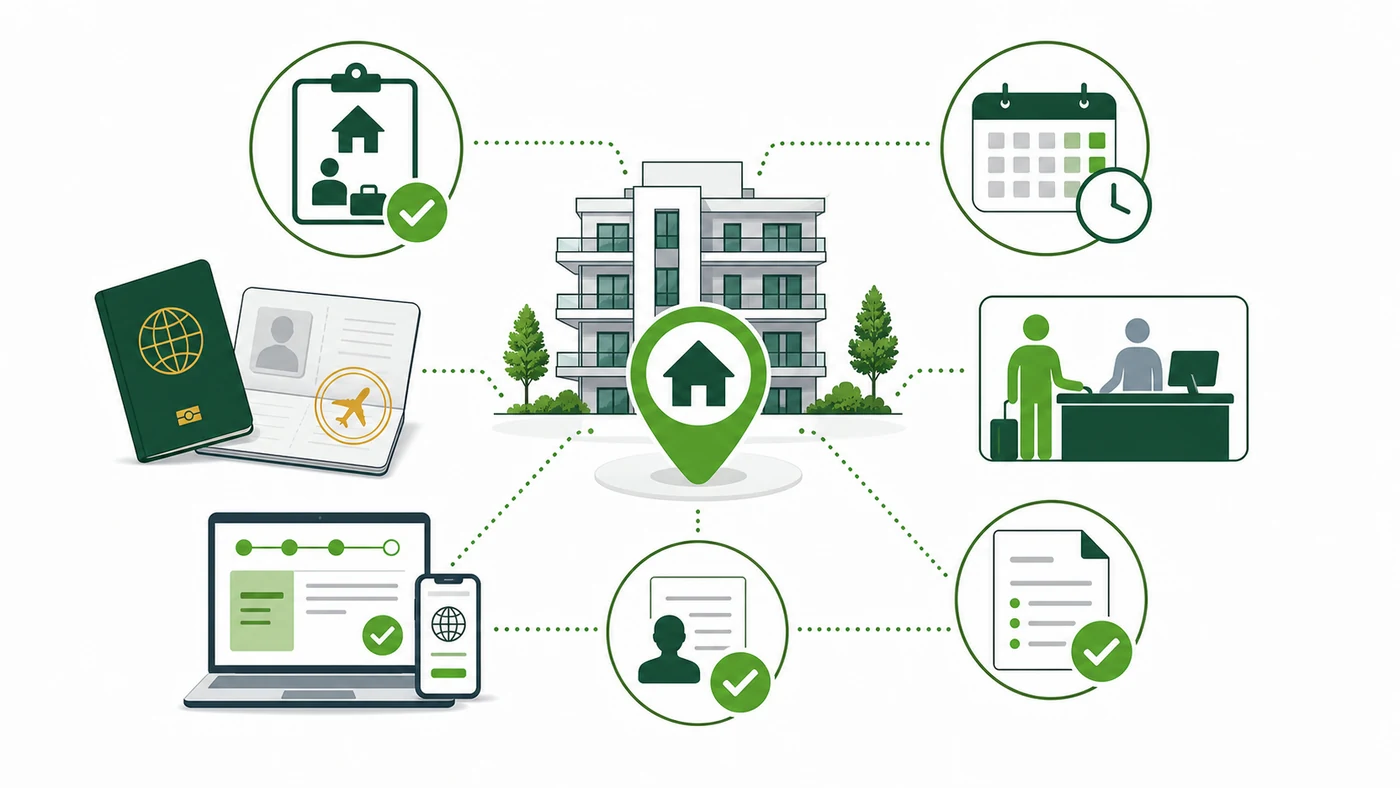
The main mistake is to think that “registration in Thailand” means one single document. In practice, there are several different obligations that are often mixed together: TM30, TM47, address changes, 90-day reporting, and now also TDAC as part of the arrival process.
So the question “to register or not to register?” is not the right question anymore. The right question is different: who must report what, when, and where, so that the foreigner’s address is visible in the immigration system and does not create problems later?
Practical point: address registration is usually not painful when it is done on time. It becomes painful when it was ignored, and then suddenly becomes necessary for visa extension, 90-day reporting, a residence certificate, a local document, or another immigration procedure.
What Registration Means in Thailand
In Thailand, address registration for foreigners is not one single action. It is a system of several separate notifications. Each of them has its own purpose, its own timing, and its own responsible person.
| Form / system | What it is | Who is responsible |
|---|---|---|
| TM30 | Notification of where a foreigner is staying or living in Thailand. | Usually the owner, landlord, hotel, condo manager, house master, or responsible person. |
| TM47 / 90-day report | Notification by a foreigner who stays in Thailand for more than 90 days continuously. | The foreigner personally. |
| TM28 / change of address logic | Notification connected with change of residence or staying in another area. | The foreigner, depending on the situation and local immigration practice. |
| TDAC | Thailand Digital Arrival Card, the digital arrival card used before entering Thailand. | Foreigners entering Thailand. |
These things should not be mixed. TM30 is not a 90-day report. A 90-day report is not a visa extension. TDAC is not a residence registration. A hotel notification does not automatically solve the address record for long-term housing after the hotel.
What Is Current in 2026
The legal basis is not new. The main rules come from the Immigration Act B.E. 2522, the Immigration Act of 1979. But practice changes. Online systems change. Immigration office habits change. The link between TM30 and later procedures becomes more important.
In 2026, the important points are these:
- TM30 remains an active requirement.
- TM30 notification should be made within 24 hours after the foreigner arrives at the address.
- The official online TM30 system works at tm30.immigration.go.th.
- TM47 / 90-day reporting remains mandatory for foreigners who stay in Thailand for more than 90 days continuously.
- The official online TM47 system works at tm47.immigration.go.th.
- Since 1 May 2025, the paper TM6 arrival card has been replaced by the Thailand Digital Arrival Card, TDAC.
- Different immigration offices may apply the address rules with different practical strictness.
This last point matters. Thailand often has a national rule, but the practical office behavior depends on the province and sometimes even on the officer. “They did not ask in Bangkok” does not mean “they will not ask in Pattaya.” “They did not ask last year” does not mean “they will not ask in 2026.”
For long-term life in Thailand, the safest position is simple: keep the address record clean before immigration asks for it.
The Legal Base: Sections 37 and 38
The two important sections are Section 37 and Section 38 of the Immigration Act B.E. 2522.
Section 38 is the basis for TM30. It says that the house master, owner, possessor, manager of a hotel, or responsible person of a place where a foreigner stays must notify the immigration authorities within 24 hours of the foreigner’s arrival.
Section 37 is about the foreigner’s own obligations. It includes the logic of staying at the notified address, notifying a change of residence, and reporting a stay of more than 90 days.
Simple difference
TM30: “This foreigner is staying at this address.”
TM47 / 90-day report: “I have stayed in Thailand for more than 90 days and I confirm my current address.”
TM30: What It Means in Practice
TM30 is the notification of residence for a foreigner. Formally, it is usually not the foreigner’s duty. It is the duty of the person or organization responsible for the place where the foreigner stays.
This may be:
- a hotel;
- a guesthouse;
- a landlord;
- a condominium owner;
- a house owner;
- a condo juristic office or manager, if they handle it;
- a friend or relative who hosts the foreigner;
- a foreign property owner registering themselves at their own property, if the local office allows and the documents are accepted.
If a foreigner stays in a hotel, the hotel usually submits TM30 without the guest noticing it. But if the foreigner lives in a rented condominium, a privately owned apartment, a house, a friend’s home, or their own condominium, the question becomes practical.
Legally, the duty is on the receiving side. Practically, the foreigner often pays for the problem. If the foreigner needs to extend a visa, make a 90-day report, get a residence certificate, apply for local documents, or prove an address, the lack of TM30 may block the process.
This is why TM30 should not be treated as “someone else’s paperwork.” On paper, yes, it may be someone else’s duty. In real life, the foreigner may be the person who loses time, receives refusal, pays a fine, or has to urgently find the owner who suddenly does not answer messages.
TM30 is not important every day. It becomes important exactly on the day when immigration asks for it.
Does a Tourist Need TM30?
If a tourist stays in a hotel, the hotel normally submits the notification. The tourist does not usually need to do anything.
If a tourist stays in private housing, with friends, in a rented condo, or in a short-term apartment where nobody handles immigration reporting professionally, the owner or host should submit TM30.
In reality, a tourist may never feel the problem if they do not visit immigration. But that does not mean the requirement does not exist.
For long-term foreigners, the situation is different. Anyone who plans visa extensions, 90-day reports, residence certificates, local banking steps, driving license paperwork, or long-term stay procedures should treat TM30 as part of the basic document system.
The TM30 Deadline: 24 Hours
The deadline is 24 hours after the foreigner arrives at the address.
This is not “within a week.” It is not “when the owner has time.” It is not “before the next visa extension.” The legal idea is 24 hours.
Different offices may be more or less strict. Some may treat a late TM30 calmly. Some may issue a fine. Some may not process the next immigration action until the address record is corrected.
When TM30 should be checked
- After arriving in Thailand and moving into long-term housing.
- After changing address.
- Before visa extension.
- Before the first 90-day report.
- Before applying for a residence certificate.
- Before asking immigration for any address-based document.
How TM30 Can Be Submitted in 2026
There are several ways to submit TM30.
Online through the official TM30 system
The official system is here: TM30 Online System, Immigration Bureau.
The owner, hotel, landlord, or responsible person registers an account, adds the property or address, and submits the foreigner’s stay information.
The system may require information such as:
- address of stay;
- date of arrival at the address;
- date of departure, if known;
- passport number;
- name and surname;
- nationality;
- date of birth;
- gender;
- telephone number or contact data.
After notification, the record can be searched and a confirmation can be exported or printed. This confirmation is often the most useful practical result.
In person at the local immigration office
The owner, landlord, responsible person, or sometimes the foreigner with proper documents may go to the immigration office and submit the notification directly.
Through an authorized person
If the owner cannot come, an authorized person may submit documents. The office may require a power of attorney and copies of the owner’s documents.
By post
Some offices may accept postal submission, but this depends on local practice. It should not be assumed without checking with the local office.
Documents Usually Needed for TM30
The official and practical document sets may differ. The basic logic is always the same: immigration wants to see who the foreigner is, where the foreigner is staying, and who is responsible for that address.
| Situation | Documents often needed |
|---|---|
| Hotel or guesthouse | Passport data from the guest; the hotel usually submits through its own system. |
| Rental condo or house | Passport copy, visa or entry stamp copy, rental contract, owner ID, owner house book or property documents. |
| Foreign owner in own condo | Passport, visa or entry stamp, chanote, blue book, purchase or Land Office documents, copies. |
| Hosted by private person | Passport copy, host ID, host house book, address documents, sometimes power of attorney. |
For long-term residents, it is better to keep a folder with copies:
- passport photo page;
- current visa or extension stamp;
- latest entry stamp;
- TDAC confirmation, if useful;
- rental contract or property documents;
- TM30 confirmation;
- previous 90-day receipt, if any.
TM30 Fines
Under Section 77 of the Immigration Act, violation of Section 38 can lead to a fine up to 2,000 baht. If the violator is a hotel manager, the fine can be from 2,000 to 10,000 baht.
Legally, the fine belongs to the responsible host side. In practice, the foreigner may still be the person standing at the immigration counter with a problem.
The unpleasant part is not only the money. The unpleasant part is when the absence of TM30 appears at the worst moment: visa extension, 90-day report, residence certificate, bank paperwork, driving license paperwork, or another administrative step.
TM30 After Trips Inside Thailand
This is one of the confusing parts.
Old legal logic and modern practice do not always feel the same. A foreigner may live at one address, travel to another province, stay in a hotel, and then return home. The hotel may submit TM30 for the hotel address. What happens to the home address after that?
In many offices, if the foreigner returns to the same long-term address, a new TM30 may not always be demanded. In other offices, officers may want the home address updated again, especially before an extension or another immigration procedure.
The safest practical rule is not to build life around forum answers. If an important immigration step is coming, check that the current address is correct in the TM30 system and keep confirmation.
Practical rule: if there is a visa extension, residence certificate, or first 90-day report ahead, check TM30 before going to immigration.
TM30 After Leaving Thailand and Returning
After leaving Thailand, the 90-day counter definitely resets. TM30 after return is more practical-office dependent.
If a foreigner returns to the same address, with the same long-term status, some offices may not require a new TM30. Other offices may want an updated record because there is a new entry stamp.
The safer approach in 2026:
- after returning to Thailand, keep the new entry stamp copy;
- check whether the local immigration office wants a fresh TM30;
- if a visa extension is coming soon, update or verify TM30;
- if renting, agree in advance who submits TM30 after re-entry;
- if owning a condo, keep access to the TM30 system or have a reliable person who can help.
TM47: 90-Day Report
TM47 is a separate obligation. It is not the same as TM30.
If a foreigner stays in Thailand for more than 90 days continuously, they must notify immigration of their current address every 90 days.
The official online system is here: TM47 Online Manual, Immigration Bureau.
Thailand’s official government portal also explains the 90-day notification requirement: Notification of staying in the Kingdom over 90 days.
How to Make a 90-Day Report
There are several official ways:
- online through the TM47 system;
- in person at the immigration office;
- through an authorized person;
- by registered mail, if accepted and done correctly.
Online reporting is convenient, but it is not guaranteed. The system may reject the application. If it rejects it, the foreigner must go to the local immigration office.
When to Submit the 90-Day Report
The 90-day report is made every 90 days of continuous stay in Thailand.
If the foreigner leaves Thailand, the count starts again after the next entry.
The online TM47 system allows submission within the official window before the due date. It is better not to wait for the last day. Online systems can fail. The application may remain pending. The system may reject the submission. The office may require personal appearance.
Do not confuse it
A 90-day report does not extend a visa.
A visa extension does not automatically cancel the need to follow future 90-day reporting dates.
Leaving Thailand resets the 90-day count.
Documents for 90-Day Reporting
The standard practical set may include:
- passport;
- copy of passport photo page;
- copy of current visa or extension;
- copy of latest entry stamp;
- previous 90-day receipt, if any;
- current TM30 confirmation or address proof;
- TM47 form, if filing on paper;
- phone and email access, if using online reporting.
Older official materials may still mention TM6. But since 1 May 2025, the Thailand Digital Arrival Card has replaced the traditional paper arrival card for most foreign arrivals. In 2026, many foreigners will not have a paper TM6. Therefore, the current entry stamp and TDAC data become more relevant in practice.
TDAC: Why It Matters Here
TDAC is not TM30. TDAC is not TM47. TDAC does not register the foreigner at a Thai address after arrival.
TDAC is the Thailand Digital Arrival Card. It replaced the paper TM6 arrival card from 1 May 2025. Foreigners entering Thailand should complete it before arrival through the official system: tdac.immigration.go.th.
TDAC matters because old checklists and forms may still mention TM6. In 2026, a foreigner should keep digital arrival data, entry stamp copies, and any confirmation connected with arrival, because offices may still ask for entry-related information.
For Foreign Condo Owners
A foreigner who owns a condominium in Thailand may be both the foreigner and the person responsible for the address in practice.
This creates a specific document logic. The owner should be ready to show property documents and address documents, not only the passport.
Condo owner checklist
- Passport.
- Current visa or extension.
- Latest entry stamp.
- Chanote or ownership documents.
- Blue house book for the condominium unit, if available.
- Land Office purchase or registration documents.
- TM30 confirmation.
- Previous 90-day receipt, if applicable.
If the condo juristic office helps with TM30, that is convenient. If it does not, the owner should understand how to submit TM30 or how to arrange it through the local immigration office.
For Renters
A renter should not leave TM30 until later. It should be discussed before signing the rental agreement.
The renter should ask:
- Will the owner submit TM30?
- How quickly after move-in?
- Will the owner provide confirmation?
- Will the owner update TM30 after the foreigner returns from abroad, if needed?
- Will the owner provide copies of ID, house book, or property documents if immigration asks?
If the owner says “TM30 is not needed,” that is a warning sign for long-term stay. A short tourist may never feel the problem. A retiree, long-stay resident, or foreigner who needs regular immigration procedures may feel it very quickly.
If the Owner Refuses to Submit TM30
This is common.
Possible solutions:
- ask the owner for documents and power of attorney;
- ask the condo juristic office for help;
- go to immigration with all available documents and ask what they will accept;
- use a reliable agent if the situation is urgent;
- choose another rental property before the problem becomes permanent.
The worst solution is to hope that nobody will ask. In Thailand, paperwork often feels unnecessary until it becomes immediately necessary.
Before Visa Extension
Before visa extension or extension of stay, it is sensible to check the address record.
Before going to immigration, check:
- whether TM30 exists;
- whether the address is current;
- whether the address matches the application form;
- whether the passport was changed;
- whether there was a recent trip abroad;
- whether the 90-day report is overdue;
- whether the office wants printed confirmation.
For retirement extensions, marriage extensions, long-stay visas, and other long-term statuses, address control can become a technical obstacle. Not because it is the most important document in life, but because immigration wants the person’s address to match the system.
Practical Scheme for 2026
For a foreigner living in Thailand long term, the safer practical scheme is this.
After entering Thailand
- Complete TDAC before entry.
- Keep the entry stamp copy.
- Move into the address.
- Make sure TM30 is submitted within 24 hours.
- Save the TM30 confirmation.
If staying over 90 days
- Set a reminder in advance.
- Check TM30 before reporting.
- Submit TM47 online if possible.
- If online fails, go to immigration.
- Save the receipt and set the next reminder.
After moving
- Submit a new TM30 for the new address.
- Do not continue using the old address.
- Make the next TM47 with the new address.
After leaving and returning
- Keep the new entry stamp.
- Check whether the office wants a fresh TM30.
- Count 90 days again from the new entry.
Register or Not?
Yes, the address should be registered.
More exactly: the foreigner should make sure that the receiving side submits TM30, and the foreigner should personally submit TM47 if staying in Thailand more than 90 days continuously.
This is not a question of liking or not liking bureaucracy. It is a question of reducing risk.
Registration is usually free or inexpensive when it is done correctly and on time. Problems begin when it was not done and then suddenly becomes necessary.
In Thailand, documents often become important not every day, but at a very specific moment: visa extension, residence certificate, bank procedure, driving license, property paperwork, hospital procedure, address confirmation, or another local administrative step.
While the law takes money for violations, it is still just money. But repeated attention to registration, online systems, and address control are signals. For long-term life in Thailand, ignoring address registration is a bad strategy.
Official Sources
| Topic | Official source |
|---|---|
| TM30 online notification | Immigration Bureau TM30 Online System |
| 90-day reporting online | Immigration Bureau TM47 Online Manual |
| 90-day notification explanation | Thailand.go.th: Notification of staying over 90 days |
| Thailand Digital Arrival Card | Official TDAC System |
| Immigration Bureau | Royal Thai Immigration Bureau |
| Immigration Act reference | Immigration Act B.E. 2522 PDF |